Creature Cards at 39c3
2026-02-12 by Spacehuhn
We were at the 39th Chaos Communication Congress (39c3) in Hamburg in December of 2025 and ran our new creature card game, AND IT WAS AMAZING!
Note: German version of this post is available on binhacken website.
The Creature Card Game
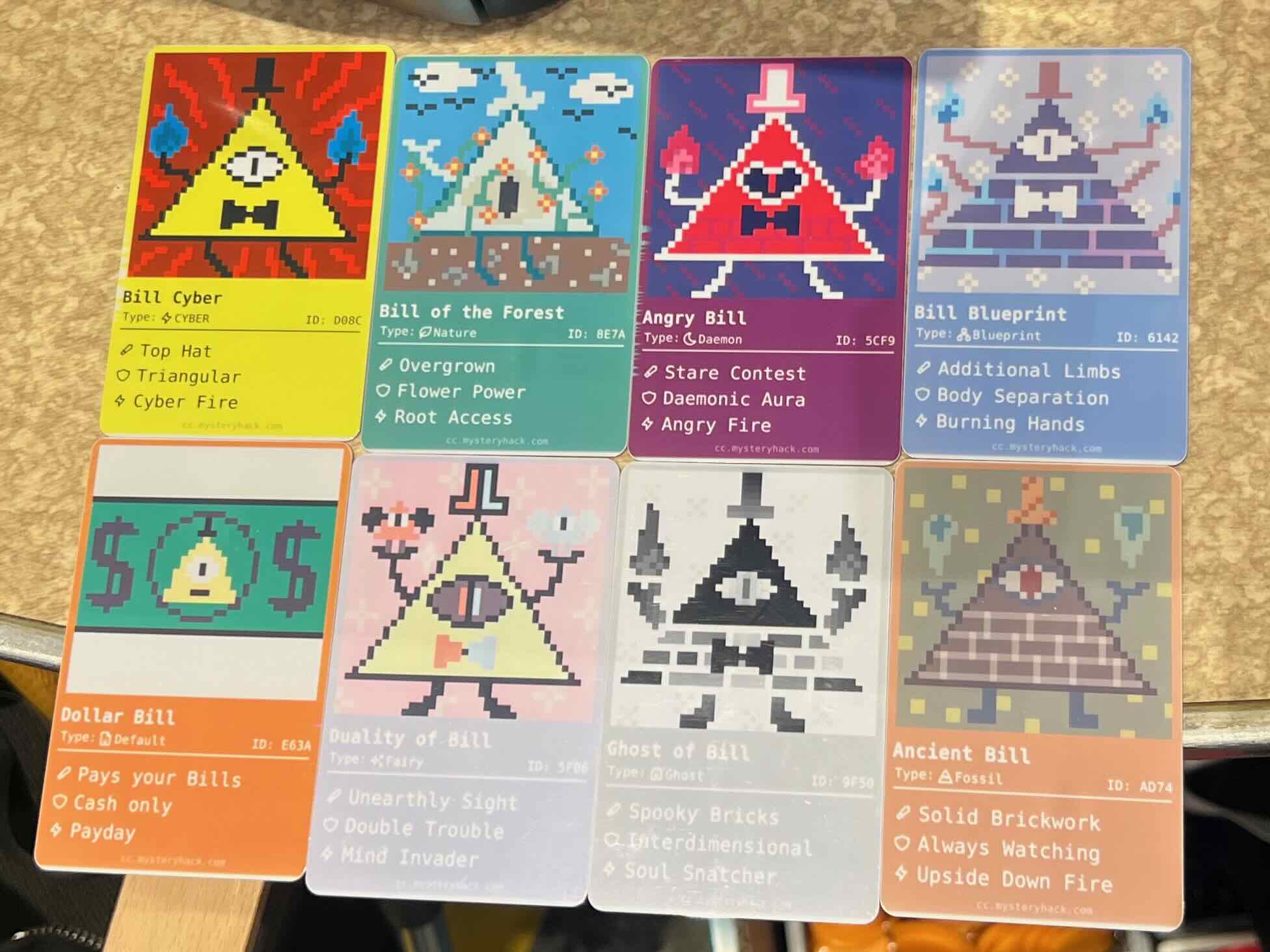
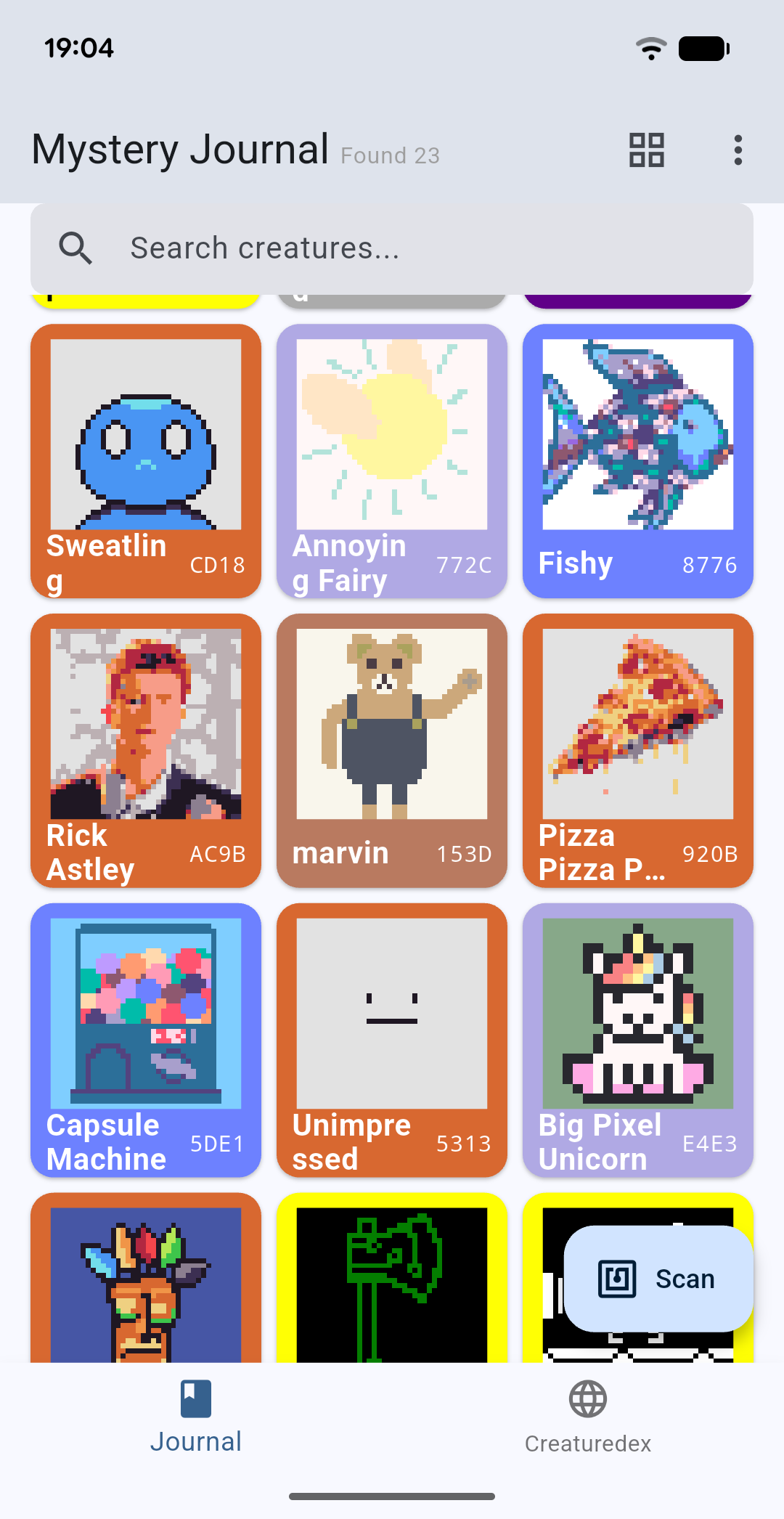
The core concept is simple: walk around the congress and collect creatures by scanning NFC creature cards with our App. It’s a digital scavenger hunt mixed with a collectable card game. But the best part is that you can also create your own creatures!
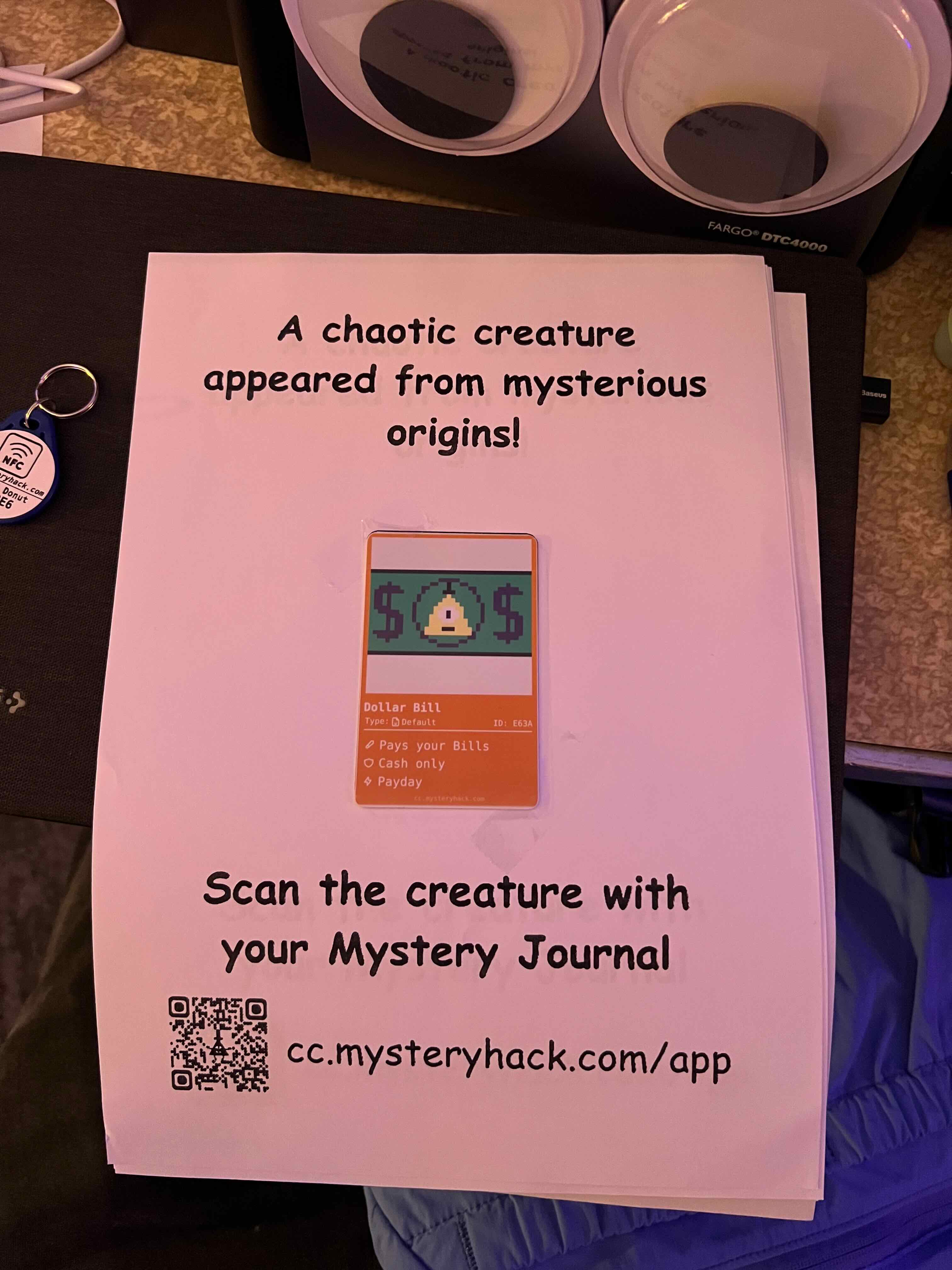
We brought a card printer and hundreds of NFC cards so anyone could design their own creature, which we would add to the game and print on site, making it part of the game for everyone to find and scan.
Seeing the variety of creature designs was one of the highlights and added a lot of energy to the game. New creatures kept appearing at new locations, and players were motivated to explore and collect them all. A simple yet very effective game loop.
You can find all the created creatures at cc.mysteryhack.com.
App Idea
After the success of our bill badge at 36c3 in 2019, we wanted to do something similar for the next congress. So shortly after, in January 2020, we started brainstorming ideas for a new game that would be fun and encourage interaction with other players. We discussed RFID, among other technologies, and as soon as someone suggested a Pokémon-like game, we were hooked.
Unfortunately, COVID-19 happened, and the next few years were pretty much a write-off for us. The idea was kept in the back of our minds. We said several times we would do it for “the next congress” or “the next camp”, but never finished it in time.
By the time of the WHY2025 camp, the idea was already over 5 years old, yet we were once again finding excuses and telling ourselves that next year would be a better time. But motivated by camp, I was committed to running the game at 39c3!
But with little time left and key members of our team not attending that year’s congress, we decided to focus only on the collecting part of the game. That meant no custom hardware like originally planned. Instead, we would develop an App to scan and collect the NFC cards.
The idea of making an App wasn’t new. I was thinking of doing it alongside our hardware, so people can participate in the game even when we sell out of badges. But given the effort required to make custom hardware, the App was never a priority until now.
Technical Design Decisions
The game is built around physical interaction at a hacker conference, so it made sense to keep it local, offline, and simple: no tracking, no user accounts, no cloud, no bullshit. Of course, this limits the features we can add, but not having to deal with user accounts, personal data and server dependencies is very freeing.
We store each creature entirely on an NTAG216 NFC card with just 888 bytes of user memory. The sprite is 38x38 pixels with just 16 available colours, and the name, traits, and secret are also limited in length and characters to fit into this little memory. That way, our App and game work fully offline as well. Our website was just there to keep track of stats and showcase all the creatures people made.
Therefore, the game itself is contained in the App and on the cards, allowing it to continue even after the congress, anywhere people bring their creature cards! Additionally, the small creature images give it a pixel-art charm and challenge players to design something recognisable, while still keeping the drawing process quick and easy for everyone.
Overall, we believe the technical constraints added a lot to the game, making it more fun, unique and accessible than it would be otherwise. Just install the App and start collecting.
Stats
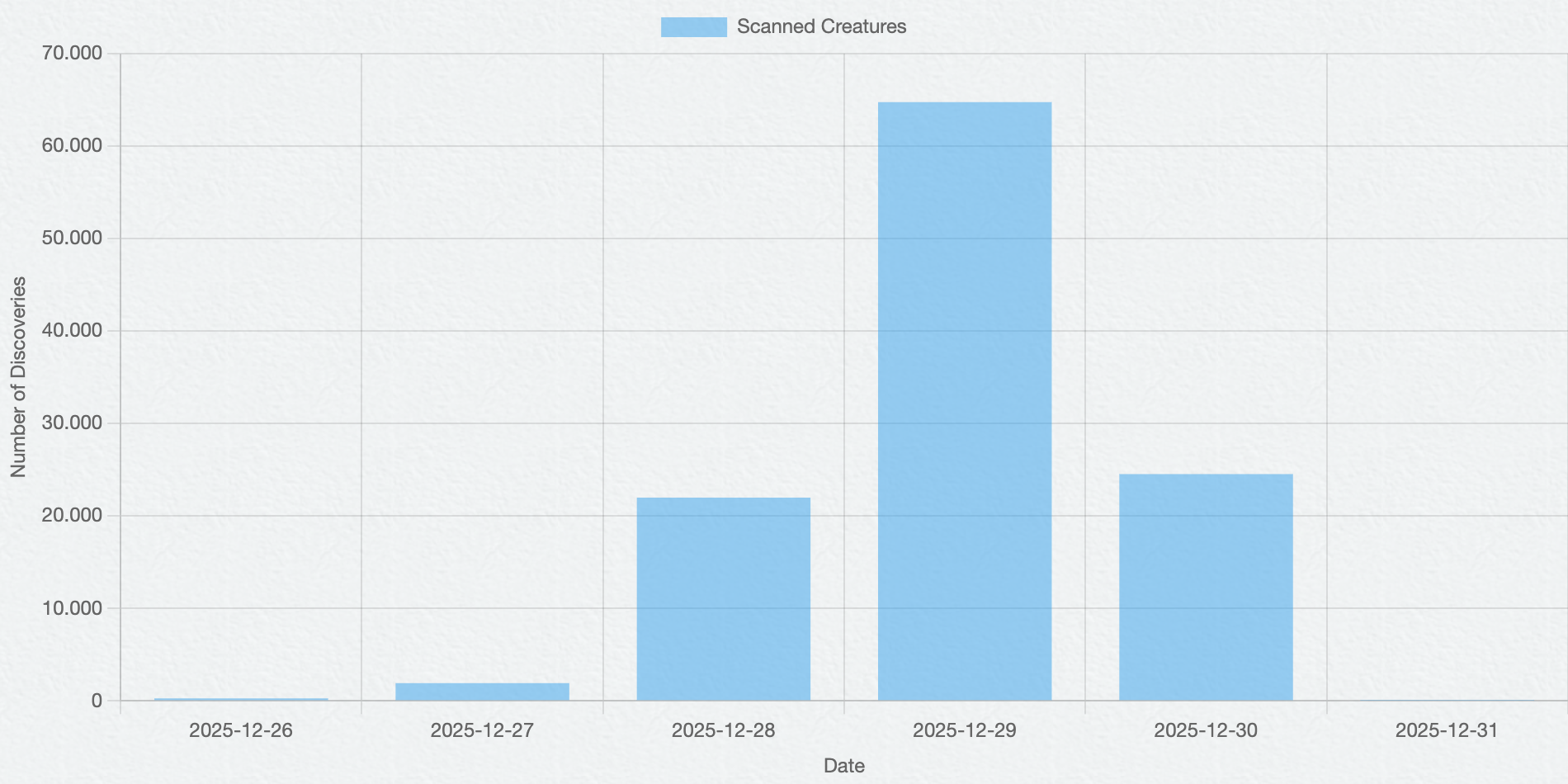
When we arrived on the 26th of December (Day 0) and set everything up, we only had a few cards prepared. Because of that, our game didn’t really take off. Since there wasn’t much improvement on Day 1, we decided to print copies of the ~30 creatures we had prepared and hang them up around the conference. Within a few hours, we had reached a critical mass of players and creatures. Before long, our game spread like wildfire:
- Day 0: 280 scans
- Day 1: 1,929 scans
- Day 2: 21,989 scans
- Day 3: 64,756 scans
It was really amazing to see how quickly the game expanded and how much fun everyone was having with the game!
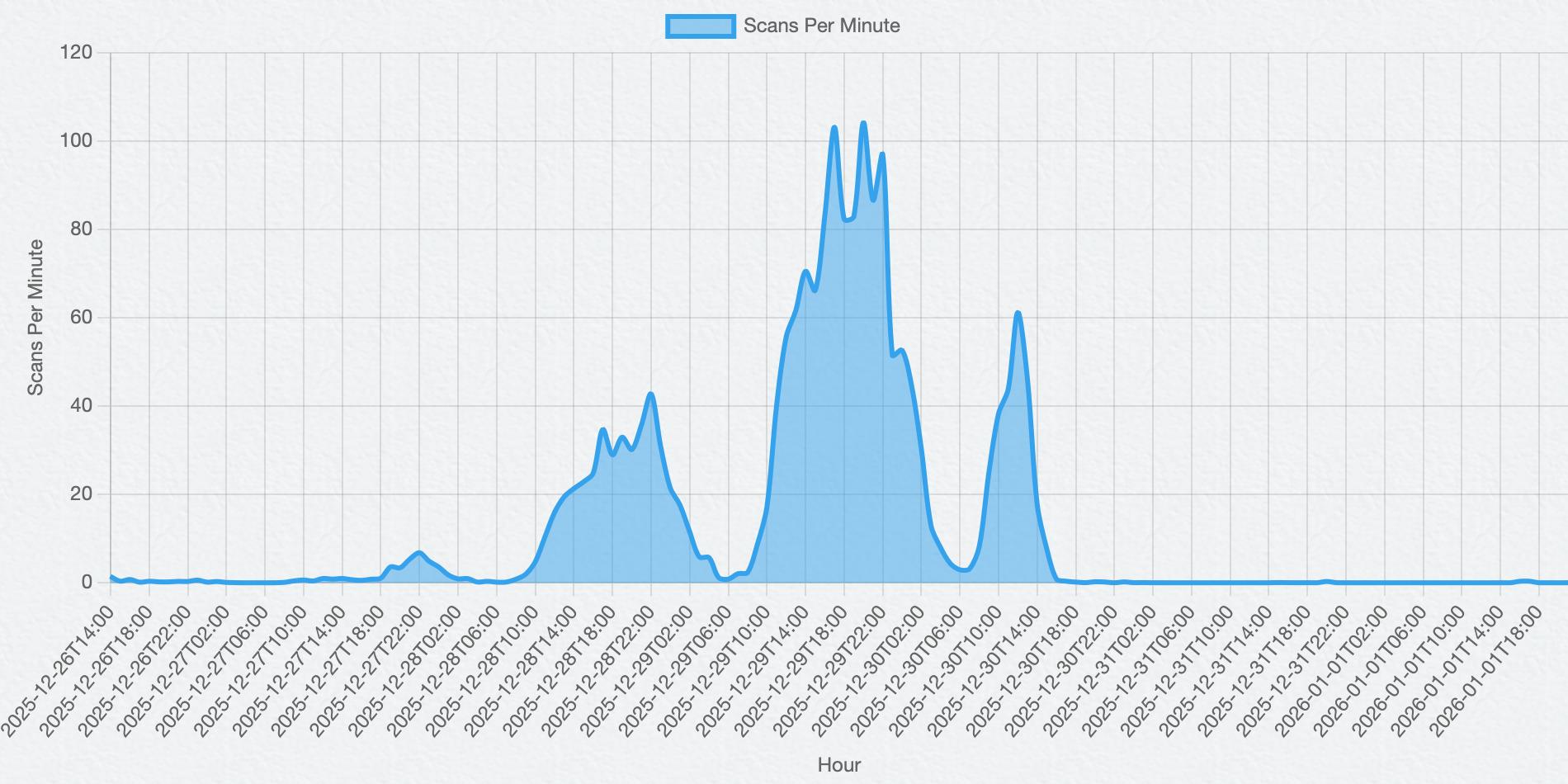
The number of scanned creature cards per minute shows how active the players were at different times of day. The peak on Day 1 appears tiny compared to those on Days 2 and 3. Day 0 isn’t even visible on the graph because it was so low compared to the other days. You can also see that the conference ended around 6 pm on Day 4, which is when the scans suddenly dropped to zero.
While the numbers in the graph are averaged over an hour, we did see short periods with an impressive 120 creature scans per minute. Each scan represents a player finding and scanning a creature card they haven’t seen before. And then 2 of such scans per SECOND! 🤯
At the end of the congress, we had 1800 players, 665 different creatures on 930 NFC tags and over 110,000 scans in total.
And yet, because each creature is less than 1 KB, the entire creature database fits in a JSON file of less than 1 MB. Even our cheap VPS running the website and database didn’t exceed 15% CPU usage at any time!
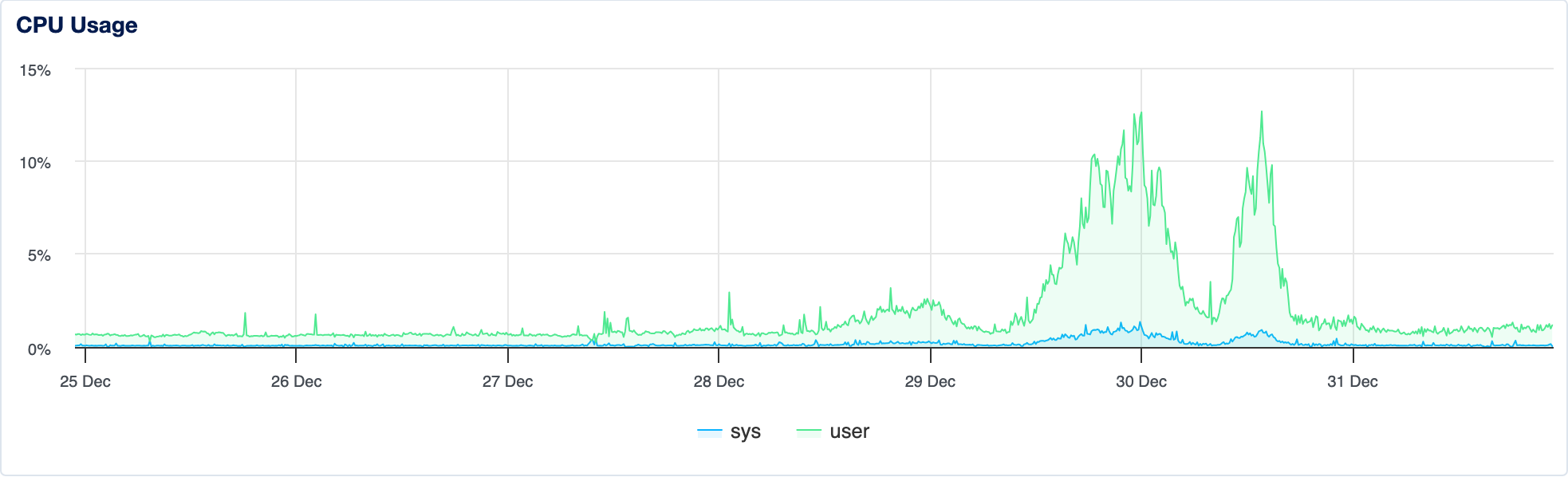
View all stats for the game at cc.mysteryhack.com/stats
Sir-Print-A-Lot
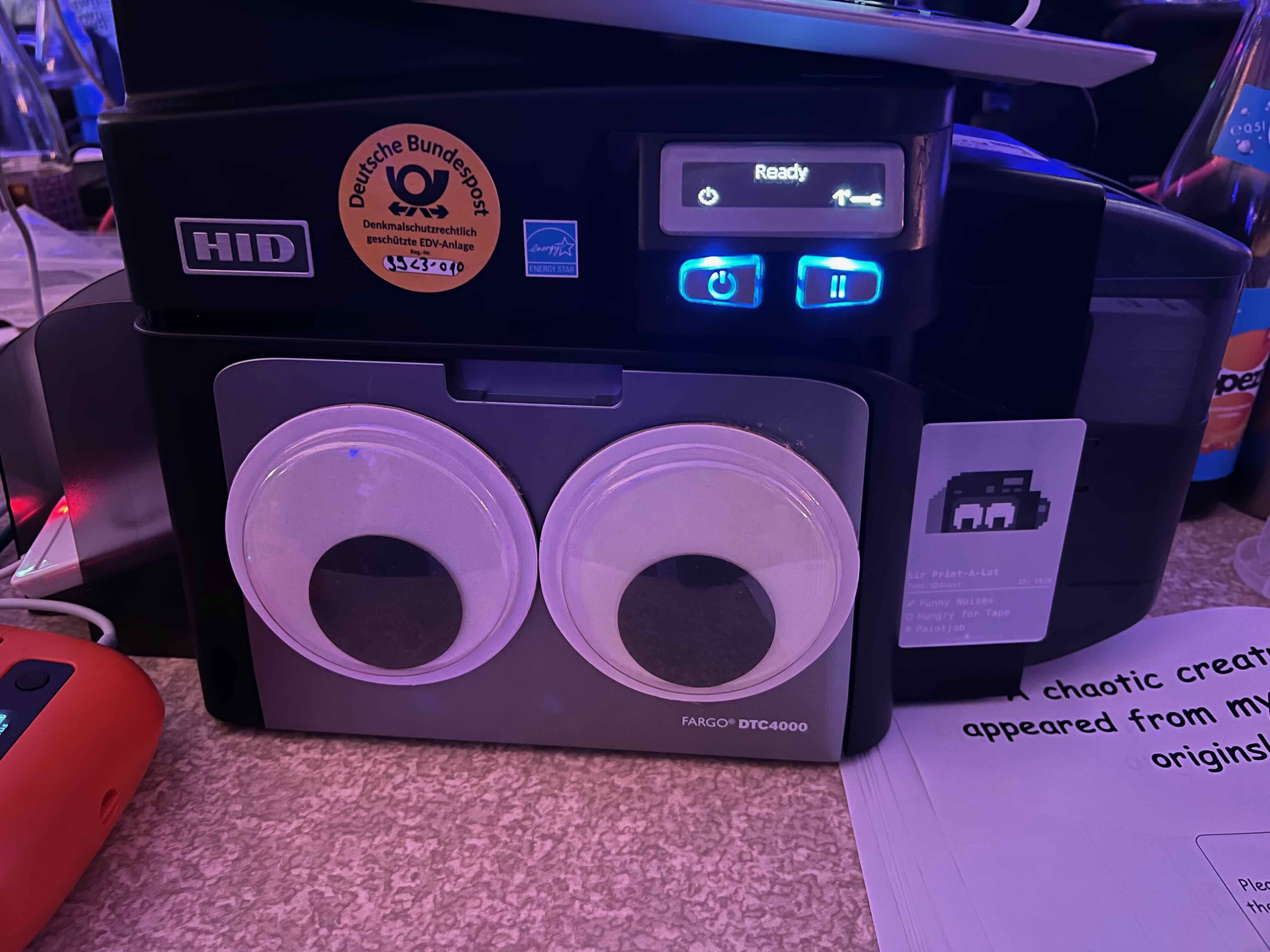
The star of our whole operation was our card printer, which we affectionately named “Sir-Print-A-Lot”.
It’s a HID Fargo DTC4000 that I got off eBay for a very good price because it was untested and no one bid on it.
And it worked great! We printed almost 1,000 cards with it during the congress. We were unsure if it would hold up to the demand, but it did!
We only had to stop printing because the queue of players waiting to print their creatures was getting too long at Day 3. We told everyone to stop submitting new creatures, as they were making them faster than we could physically print them!
Perhaps we need a Sir-Print-A-Lot-Faster for next congress 😬.
Also, because the printer is old, the drivers are Windows-only. That meant our terminal-based software for approving and printing creatures was running in a Windows PowerShell terminal, which drew a lot of interested looks from the Linux-dominated community at such events. (Not sure if this is a good or bad thing, but it was definitely a conversation starter!)
What next?
First of all, we have to finish the PCB! That was the original idea of the game, and we still plan to do it. The hardware badge will also allow you to train your creatures and battle other players, something currently missing in the game.
We already updated the App to allow you to import/export your creature collection, and we highly recommend you do that. After all, the game will continue at 40c3 and beyond, with new creatures and features, and we don’t want you to lose your progress.
Then, while we were very lucky that our printer held up, its printhead is already showing signs of degradation, visible on some of the cards. Some colours are also slightly off, and the old drivers don’t let us adjust them. Therefore, a more reliable, faster printer will be required for the next congress.
We want to improve the whole process from drawing a creature in the sketchbook to us printing it. It should be easier and more efficient to help prevent huge queues of people waiting to print their cards, as we saw on Day 3.
And while we wait for 40c3, I will run the game again at the Nacht der Wissenschaft in Bingen. It is a great opportunity to test the game in a different environment and with a different audience. And a great reason to work on the codebase to add support for different events.
We might also change the game’s name and branding a bit, perhaps to “Creature Cards”. We called the app “Mystery Journal” because we were thinking of adding more than just “creatures” to it, but now that we have a better feeling for how the game is played, it makes sense to focus on the aspect that players care about most. Also, using a coherent name for the game and the app is a lot less confusing.
As far as open-source publishing goes, we need more time! Not just for cleaning up the codebase, writing documentation, and setting up a public repository, but also to ensure we have a clear plan for maintaining and supporting it going forward. Just dumping the code would only lead to more work and problems right now. (Keep in mind that the entire game is developed in our free time.)
Many of you asked us at 39c3 how to run the game for local events or use it in their school or other settings, and we want to make that possible! Still, we want to make sure we can support them and provide the tools and documentation they need. The game is simple on the surface, but there are many underlying components that interact with each other, requiring extensive knowledge to operate and maintain them. It’s not as simple as starting a web server and buying a card printer. (God, I wish it were that easy!).
So hopefully, over time, we can develop the codebase to a point where it is easier to deploy and maintain, works across several events, and allows “self-hosting” it without losing the game’s values that make it so unique and special 🙂.
Special Mentions
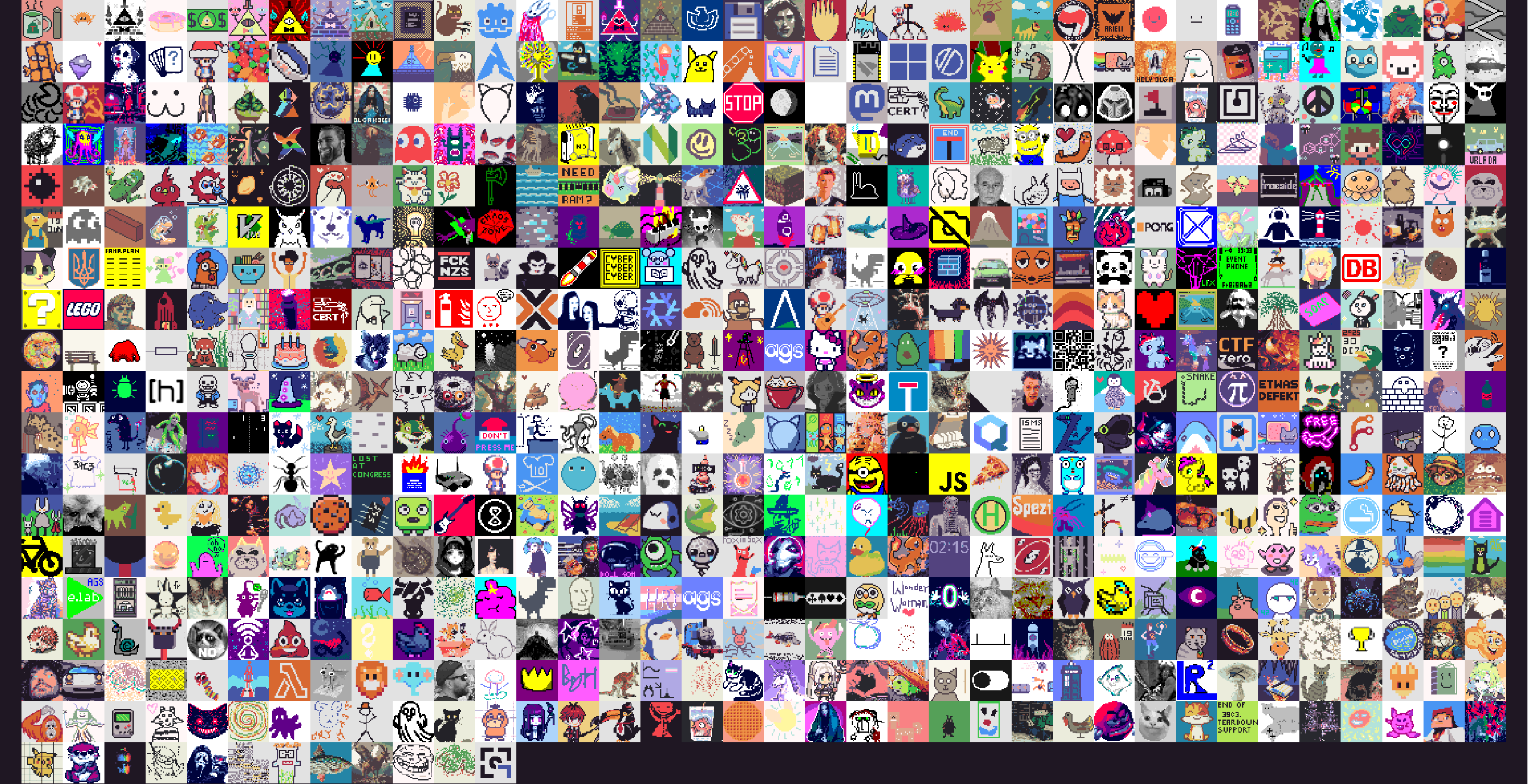
Thank you to all the players who participated in the game, especially the artists who made some really amazing creature designs! We had so many great creatures at the congress, which truly made the game feel alive, fun, and unique. Couldn’t have done it without you! Here you can see all the creatures that were created during the congress:
The Red Mammoth was the very first creature we approved and printed.
Congratulations to Tea Mobile for being the most scanned creature in the game, and thanks for bringing us tea!
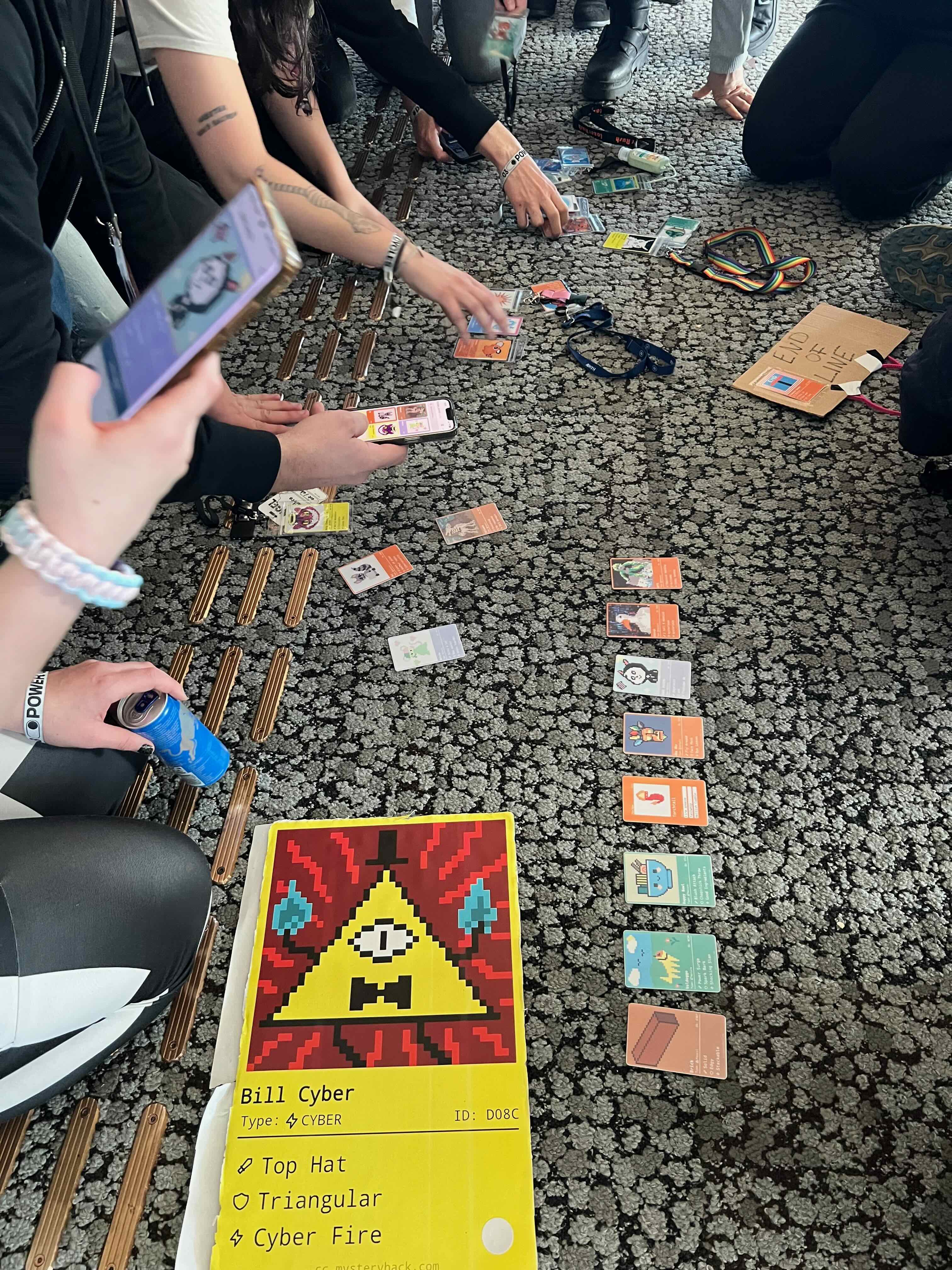
There was a card exchange meetup on the last day of the congress, where players shared their creature cards with each other. For us, this was one of the most rewarding moments of the whole event. It was amazing to see so many happy players sharing their creations in one place, enjoying a game that didn’t exist a few days earlier.
A special mention to that one person with an NFC implant who was brave enough to let us flash a creature onto it. That’s dedication! And sorry again for writing protecting it by accident (don’t worry, we managed to unbrick it 😅).
The Suspicious Button creature would trigger the actual button on their table when you scanned it to play funny sounds. We’d love to see more such game integrations at the next event!
It was great to see Polygen game again, which ran alongside ours. We saw people use their personal creature cards to play it, showing how our different game designs complemented each other perfectly. Hopefully, we can collaborate more for future events!
It was a pleasure to listen to the Freakshow Podcast 302 where the game was mentioned around minute 28 to 34.
Hackerspace Bingen, with whom we shared an assembly, helped us manage the demand of players who wanted to print their creatures.
Thanks to everyone who sent us a postcard or brought us little gifts - or big ones, such as the giant printed Bill Cyber card (visible in the meetup picture above). I still have the card on my wall, and it makes me smile every time I see it.
And of course, thank you to the countless volunteers who helped organise 39c3.