Creature Cards at the Night of Science
2026-05-11 by Spacehuhn
We brought Creature Cards to the Night of Science (Nacht der Wissenschaft) at the University of Applied Sciences TH-Bingen on April 17th, 2026.
After the success of our game at 39C3, we wanted to see how it would perform in a different setting. Check out our 39C3 post if you missed it.
It’s an NFC-based collectible card game where you walk around an event and scan cards with our Creature Journal App to collect creatures. You can also design your own creatures, which get printed and added to the game.
A Very Different Setting
The Night of Science is a public science event where the university opens its campus for an evening with talks, demos, and activities. There are guided tours, open labs, and people showing off their research and projects.
It’s not exactly the same thing as a four-day hacker congress, but not too far off either. The audience is more general and the event is shorter, but there’s still a lot of interesting content to explore.
On 39C3 we let the game grow organically, with players creating cards for whatever they wanted. Here, we had to be more proactive in seeding the game and making sure there were enough cards to collect right from the start.
We prepared 48 cards in advance, covering all of the activities and some locations around the campus. The card designs were kept thematically consistent with its matching activity, but deliberately playful and a little funny, because a dry scientific creature card wouldn’t be as engaging.
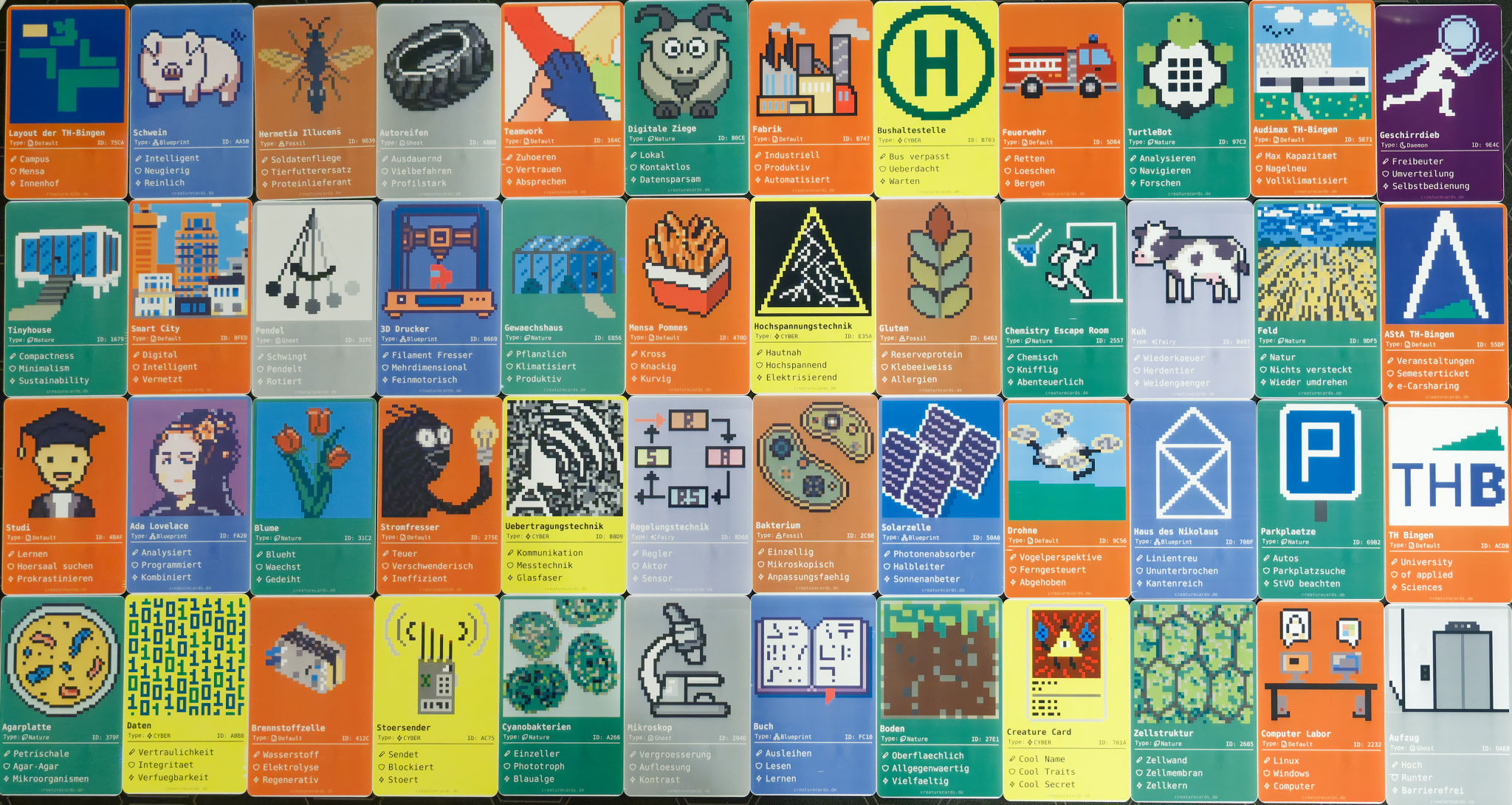
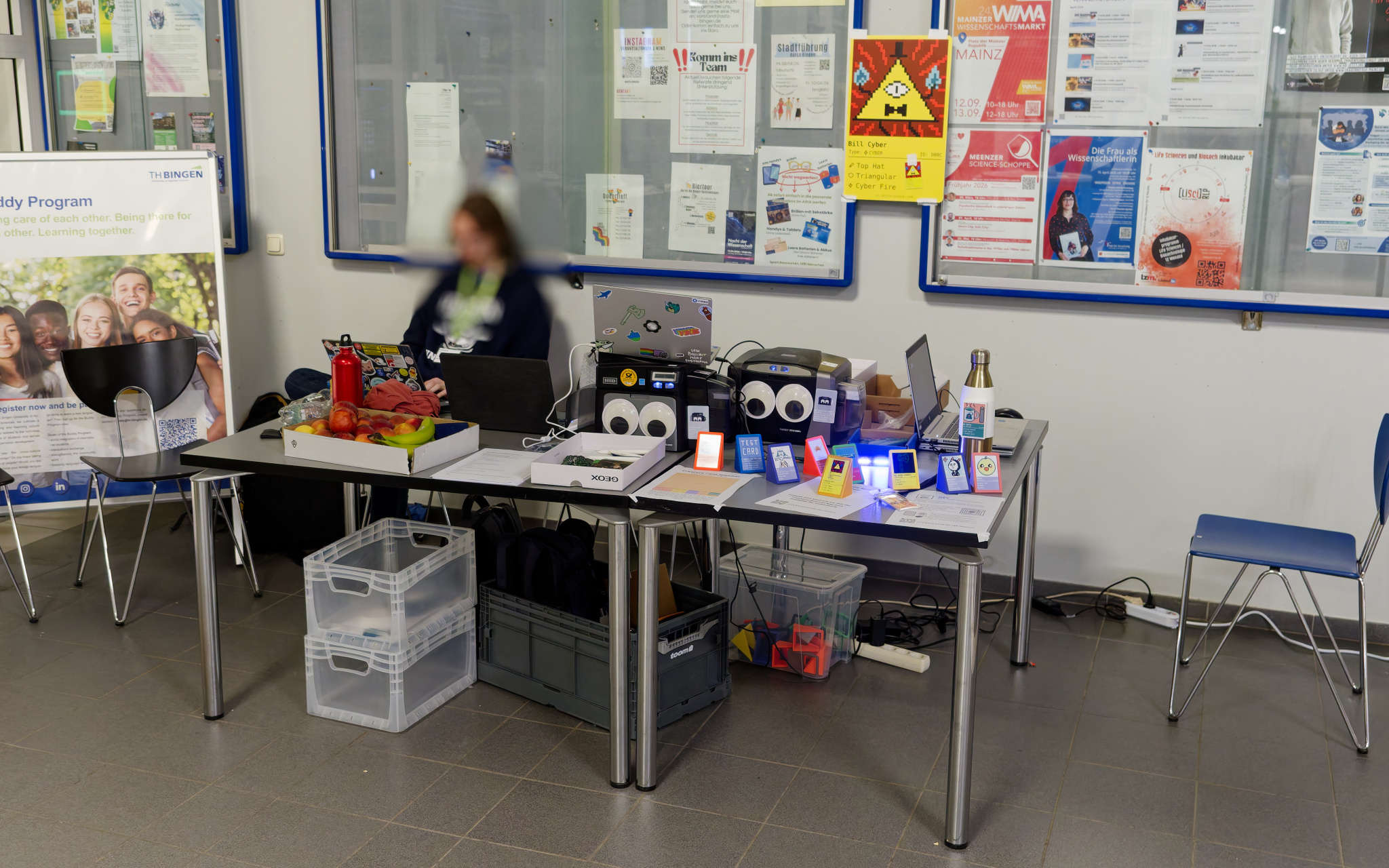
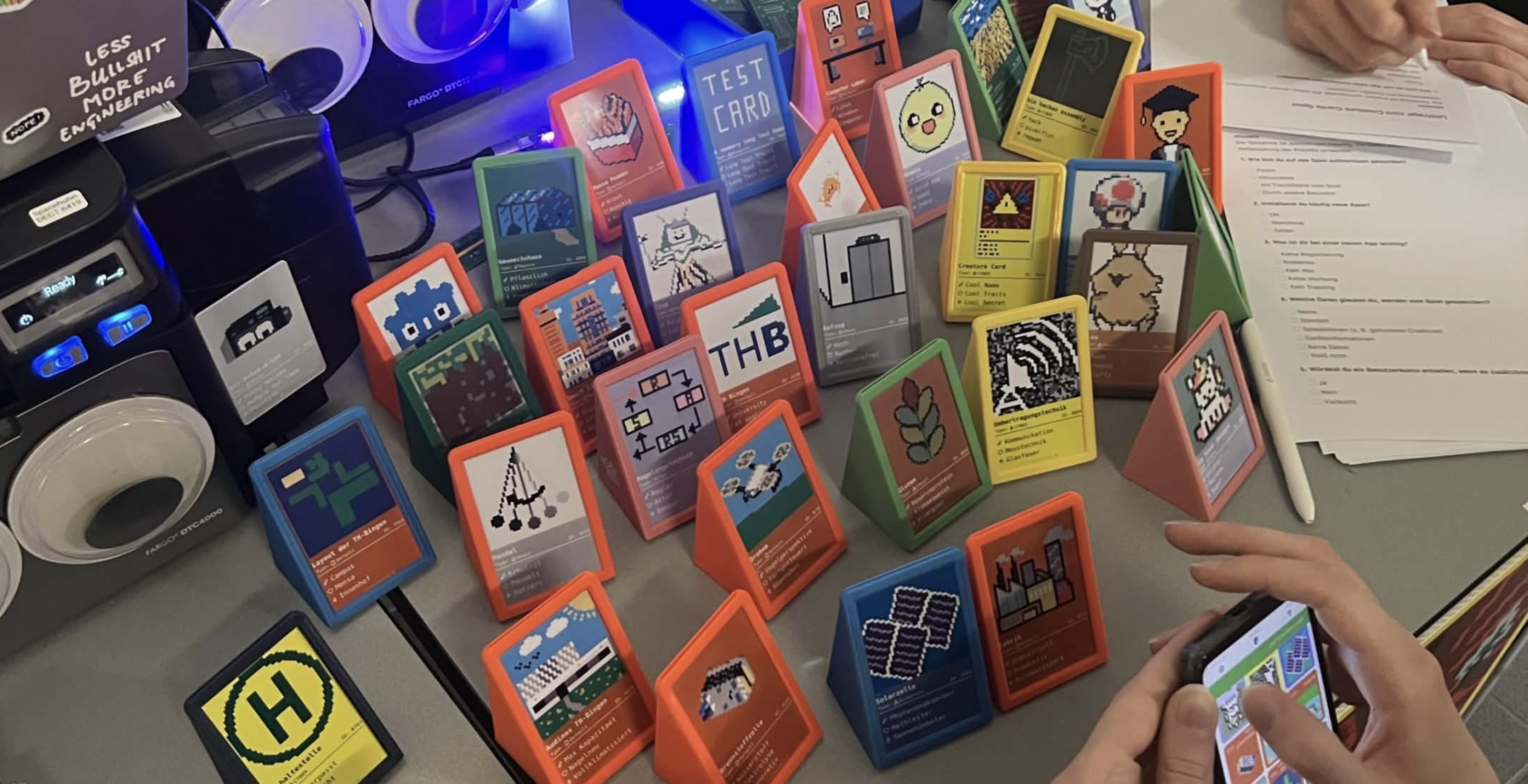
We hoped this would encourage people to explore the event and discover the different activities, making the game complement the event rather than just being one of its activities. We also had a table where visitors could learn about the game and design their own creatures. Like at 39C3, we had a card printer on site so that people could get their creature cards printed right away and take them home.
Game Updates
Initially the game was designed for 39C3 only. So improvements for this event were mostly for the backend to support multiple events and different languages. The website got a complete overhaul and is now accessible via creaturecards.de. Players now get a random generated username when they first scan a card. The idea is to extend this functionality in the future to allow players to choose their own username, join teams, and have more extensive player profiles with stats and achievements. The app also got some minor UI improvements and bug fixes, but the core gameplay remained the same.
The creature cards from 39C3 remain compatible, meaning new cards from new events continue to extend the game. So please keep your creature cards safe and bring them to future events to keep playing and collecting!
Sir Print-a-Lot’s Redemption Arc
If you read our 39C3 post, you already know our beloved card printer Sir Print-a-Lot and that we were looking for an alternative to improve quality and reliability. Unfortunately, a new printer wasn’t in the budget. But with some luck on eBay, we managed to get another untested HID cardprinter for little money. We called him Sir Print-a-Lot Junior, as he’s the smaller but newer version of the same model.
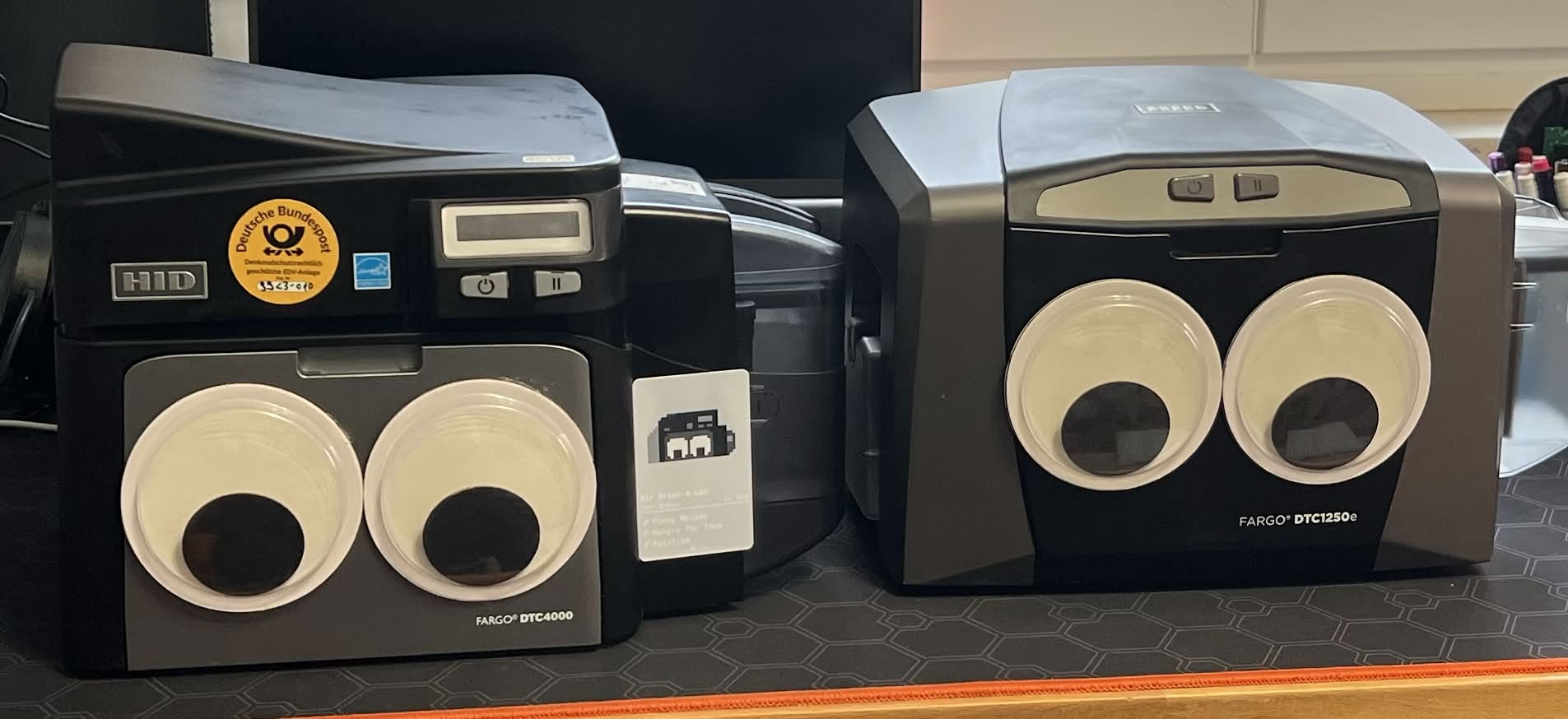
It took dozens of hours of troubleshooting, researching, swapping parts between the two printers, printing hundreds of test cards and the help of a kind support employee at HID who sent us replacement parts. But now old Sir Print-a-Lot is back to a state where it can print cards reliably and with much better quality than before! The newer Sir Print-a-Lot Junior, however, is still a bit of a mystery. It works, but its print quality remains inconsistent no matter what we do. While this isn’t ideal, especially given the age of both machines, it’s a relief that we have a working printer now.
Stats
Compared to 39C3, we had a much smaller player base and a much shorter time frame, so the numbers are quite different. We had 66 active players and 1687 total card scans, which is a good turnout for a one-evening event. Activity ramped up steadily from 18:00 and peaked around 20:00, staying fairly constant through the rest of the evening.
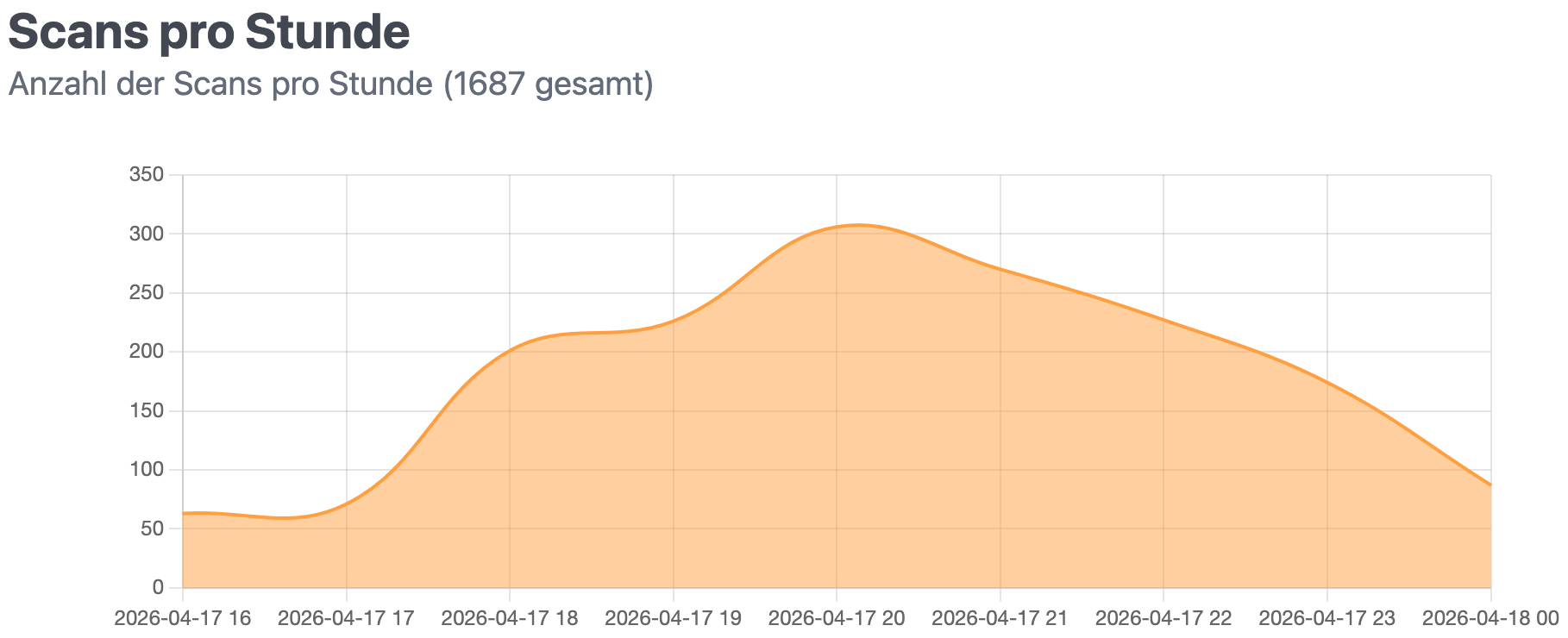
80 Creatures were added to the game, with 48 prepared by us and 32 created by players on site. You can view the full stats here: creaturecards.de/stats/NDW26.
What We Observed
We were unsure what to expect from such an event and its audience, but overall it went really well. Our game didn’t feel out of place, and seeing people engage with it and create their own cards was genuinely exciting. Over time we saw more and more very enthusiastic players who were eager to collect all cards and often visited our table to check for new cards and to create their own. That part felt exactly like 39C3, which was a great sign that the game can work in different settings and with different audiences.
We got a smaller player base than expected, but what they lacked in numbers they more than made up for in enthusiasm. Our best guess is that the event was simply too short to grow a bigger player base. People who didn’t engage right away didn’t have time to come back later. It mostly drew in people who were already into collecting and pixel art.
At 39C3 we saw a slow buildup but once we hit a critical mass of players, the game grew exponentially. More players meant more people creating cards, which increased visibility and variety in creatures, which attracted even more players, and so on. This viral loop is a powerful growth mechanism, but it needs time to kick in. With only one evening, we didn’t have that luxury, so the game was only played by a smaller, more dedicated group of players.
Nonetheless, we saw some interesting and creative uses of the system. Members of the AStA (the General Student Committee) created their own creature cards at the event and used them to attract visitors. One of the cards gave you a free drink when you scanned it. That’s exactly the kind of creative, unexpected use that makes it so fun. And some of the most scanned cards of the night were those created on site. So even without the viral loop kicking in, the stats show that the concept also works at short events with more general audiences.
Lessons Learned
One thing became clear: the smaller and shorter the event, the more important it is to get people engaged right from the start. Preparing event-specific cards is a great way to kickstart the game by giving players something concrete to look for right away. We’ll definitely do this again for future events. But to reach a broader audience, we need to find ways to make the game more visible and inviting for those who might not be immediately drawn to it. We’re also excited to work on features like custom usernames, teams, leaderboards, and achievements - things that would make the game even more engaging for players of all kinds. At the time of writing this, we are looking into running the game at GPN24 in Karlsruhe in July 2026.
Thanks
Thanks to Professor Kulesz for organising the Nacht der Wissenschaft and for the opportunity to run the game there. Thanks to Robert and Emily for running the stand with us and tirelessly distributing cards across the campus all evening. Thanks to Tobias for the pixel art designs on the cards. And a big thank you to Wayne at HID for sending us the replacement parts that helped resolve the printer issues.
And of course, thanks to everyone who played, created a card, or just stopped by our table to take a look. We hope to see you again at future events!